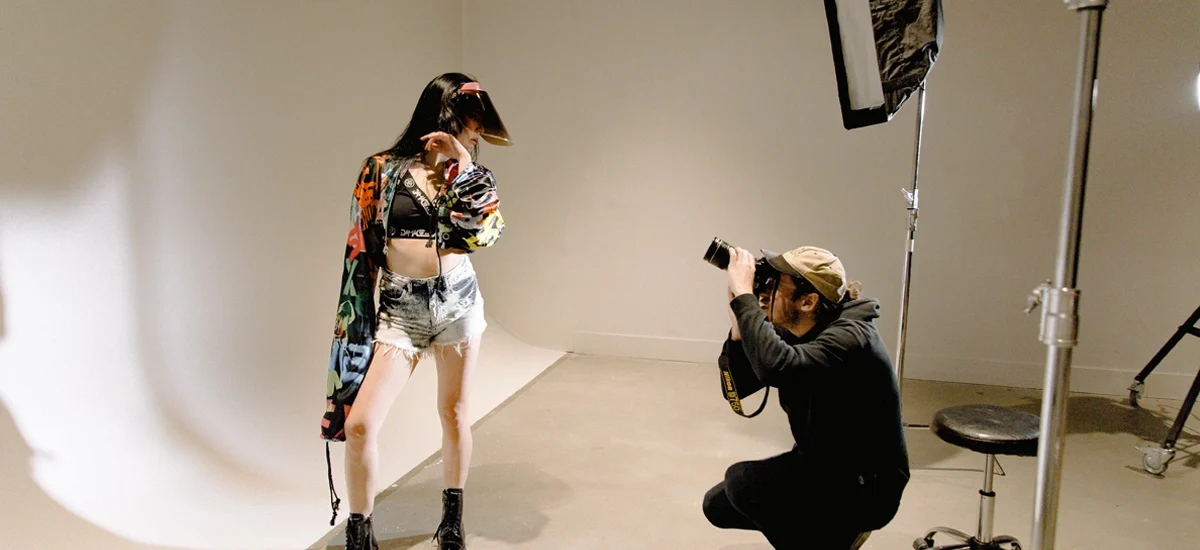
Easy Tips for Photographing Models to Get Cool Results
Photographing models is challenging yet exciting, requiring attention to detail to ensure each photo looks stunning, professional, and full of expression.

To achieve the best results, it is important to pay attention to lighting, composition, and the model’s pose. In the following, Photography – Capturing Every Detail will discuss various easy tips and techniques for photographing models to get cool and professional results.
Optimal Preparation and Lighting
Lighting is key in model photography because it determines the quality and mood of the photo. Understanding how light works will make the results more professional and appealing. Both natural and artificial light play a crucial role in influencing the color, shadows, and texture of the model’s face and clothing.
For indoor shoots, use a combination of lamps or flash to evenly illuminate the model. Adjust the light intensity to suit the theme; some photos may require soft lighting from only one side. Ensure the model’s makeup isn’t too heavy to maintain an elegant look and balance with the clothing colors.
Outdoor shoots should utilize morning or afternoon sunlight. Avoid the hours of 11:00 AM–1:00 PM, as harsh light can cause overexposure. If there’s insufficient light, use a reflector or additional flash to maintain optimal exposure and brighten the model’s face.
Read Also: Revealing Emotions Through a Black and White Lens
Composition and Shooting Angle

Shooting technique determines the focus and aesthetics of the photo. The “Rule of Thirds” helps place the subject in a focal point, creating a more balanced photo. However, this rule is flexible; object placement can be adjusted to suit the theme and message of the photo. Many modern cameras offer a grid feature to facilitate its application.
Experimenting with angles can produce unique photos. Shooting from above provides an interesting perspective, while a 45° angle adds a different dimension. Avoid angles that are too low to keep the model’s facial and body proportions looking natural and professional.
Furthermore, the choice of shooting angle is also important. From Extreme Close Up (ECU) to Extreme Long Shot (ELS), each can highlight specific details or provide context for the surrounding environment. Each technique serves a different purpose, from emphasizing expression to showcasing the model’s overall activity.
Model Expression and Interaction
The eyes are the center of expression; a sharp focus on the model’s eyes will bring life to the photo. For shy models, create a comfortable atmosphere so that smiles or expressions appear natural. Tilting the head slightly can make the model appear friendlier, while a straight posture adds strength.
The model’s body and hand movements also influence the aesthetics of the photo. The position of the hands framing the face can emphasize the pose, while the use of props can add character to the theme. Avoid pressing the hands against the cheeks to maintain facial proportions.
Interaction with the environment and camera makes the photo more dynamic. A model who actively adapts her pose to the background or props creates a natural and expressive feel. Creativity is crucial for producing unique and engaging photos.
Creative Techniques and Photography Details
Using different lenses produces diverse effects. Prime lenses provide beautiful bokeh, while kit lenses are flexible for 18–55mm distances. Lens selection should be tailored to the theme and main focus of the photo.
Background and contrast are also important. For dark hair, choose a lighter background so it doesn’t blend into the background. Pay attention to the color contrast between clothing and the environment to highlight the subject without disrupting the aesthetic.
Small details like soft lighting, reflections from walls, or precise shadows will enhance visual quality. Creativity in using light, lenses, and props makes photos more professional and memorable.
Keep monitoring the various interesting information that we provide every day, of course, it is only trusted at Photography – Capturing Every Detail.
Image Source:
First Image from skylum.com
Second Image from hypop.com.au
