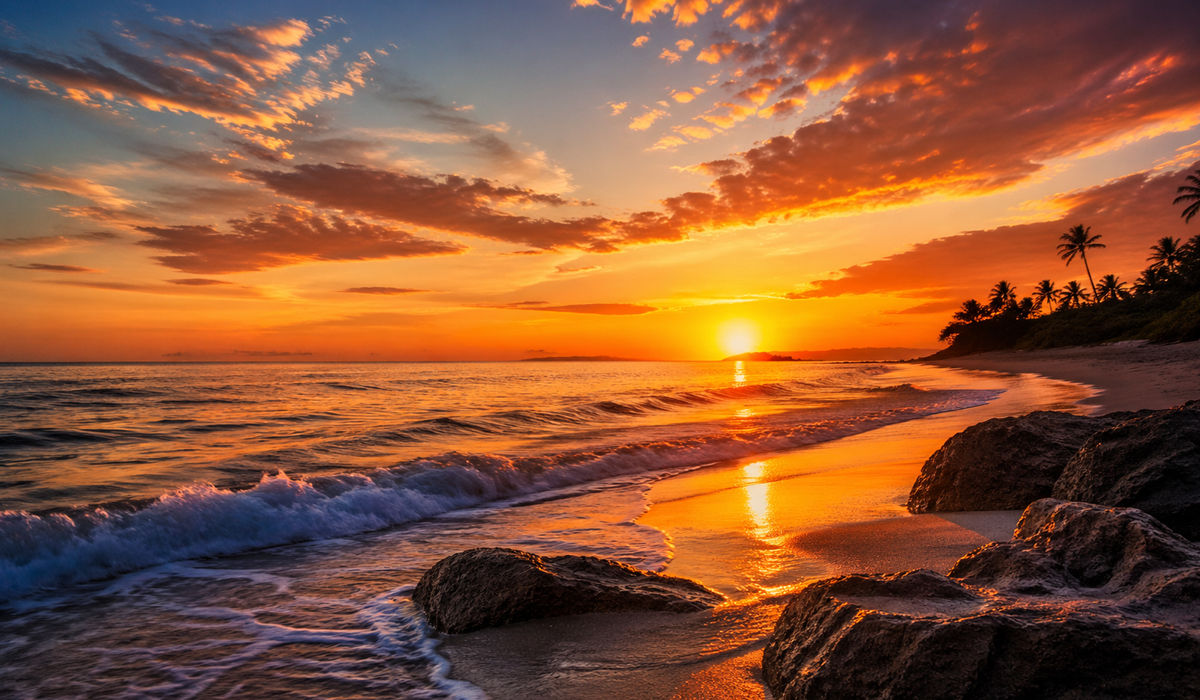
Beach Sunset: The Right Techniques And Camera Settings
Photographing a beach sunset is both rewarding and challenging, blending vibrant colors, shifting light, and perfect timing into one moment.
The combination of sky colors, light reflections on the water, and silhouettes of objects creates a truly beautiful moment to capture. However, achieving optimal results requires proper technique and camera settings that adapt to the constantly changing light conditions. Don’t miss the related discussion that can help improve your photography skills at Photography – Capturing Every Detail.
Understanding The Characteristics Of Sunset Light
The light at sunset is soft and warm, often referred to as the golden hour. Colors like orange, red, and purple appear naturally, giving the photo a dramatic feel. However, the light intensity decreases rapidly, so photographers must be agile in adjusting camera settings.
Furthermore, the direction of the light also significantly determines the outcome of the photo. Shooting directly at the sun will produce interesting silhouettes, while shooting from a different angle can capture object details with more even lighting. Understanding these changes in light is key to sunset photography.
Determining An Attractive Composition
Composition is a crucial element that determines the beauty of a photo. One frequently used technique is the rule of thirds, where the horizon line is not placed directly in the center, but in the upper or lower third of the frame. This helps create a more interesting visual balance.
Additionally, add foreground elements such as rocks, boats, or footprints in the sand to add depth to the photo. A good composition not only showcases the beautiful sky but also conveys a story within a cohesive image.
Also Read: Editorial Fashion Photography Crafting High-End Visual Stories
The Right Camera Settings
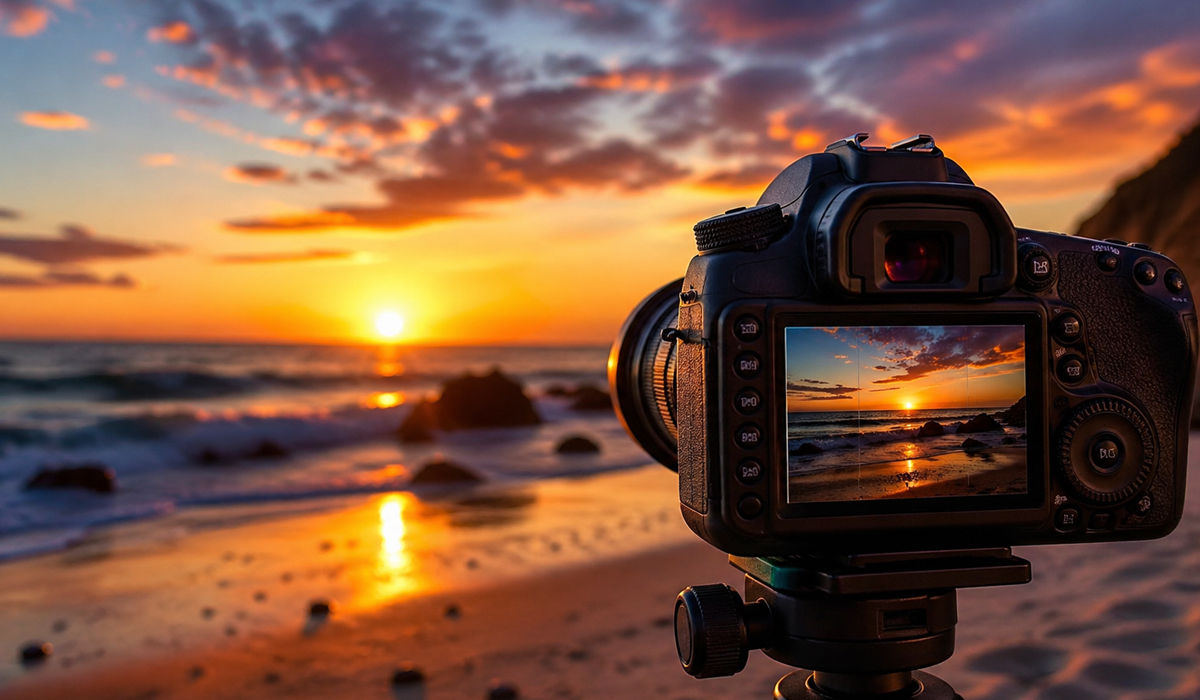
For optimal results, use manual or aperture priority mode. Set the aperture between f/8 and f/16 for maximum sharpness throughout the frame. It’s best to keep the ISO low, such as ISO 100 or 200, to keep the photo noise-free.
The shutter speed needs to be adjusted to the lighting conditions. When the light starts to dim, use a tripod to keep the image stable even with a slower shutter speed. Using a “cloudy” or “shade” white balance can also help enhance the warm colors of the sunset.
Utilizing Silhouettes And Reflections
Silhouettes are one of the most popular techniques in sunset photography. To create a silhouette, point the camera at the light source and adjust the exposure to keep the background bright, so that the foreground objects appear dark and contrasting.
Furthermore, light reflections on the water’s surface can add an artistic dimension to the photo. Calm sea water will produce subtle reflections, while small waves can create unique textures. Both of these elements can be utilized to enrich the final photo.
Timing And Patience In Photography
Timing is a crucial factor in photographing sunsets. Arrive early to find the best spot and prepare your equipment. Don’t just shoot when the sun is directly on the horizon, but also a few minutes later, as the sky often becomes more dramatic.
Patience is also essential because natural conditions are unpredictable. Clouds, wind, and weather changes can affect the outcome of a photo. However, with persistence and experimentation, every moment can be an opportunity to produce stunning work.
Conclusion
Photographing sunsets at the beach isn’t just about luck, but also skill in understanding light, composition, and camera settings. With the right technique and patience in waiting for the best moment, you can produce photos that are not only beautiful but also meaningful.
Image Source:
First Image from: lyssandhercamera.com
Second Image from: lyssandhercamera.com
