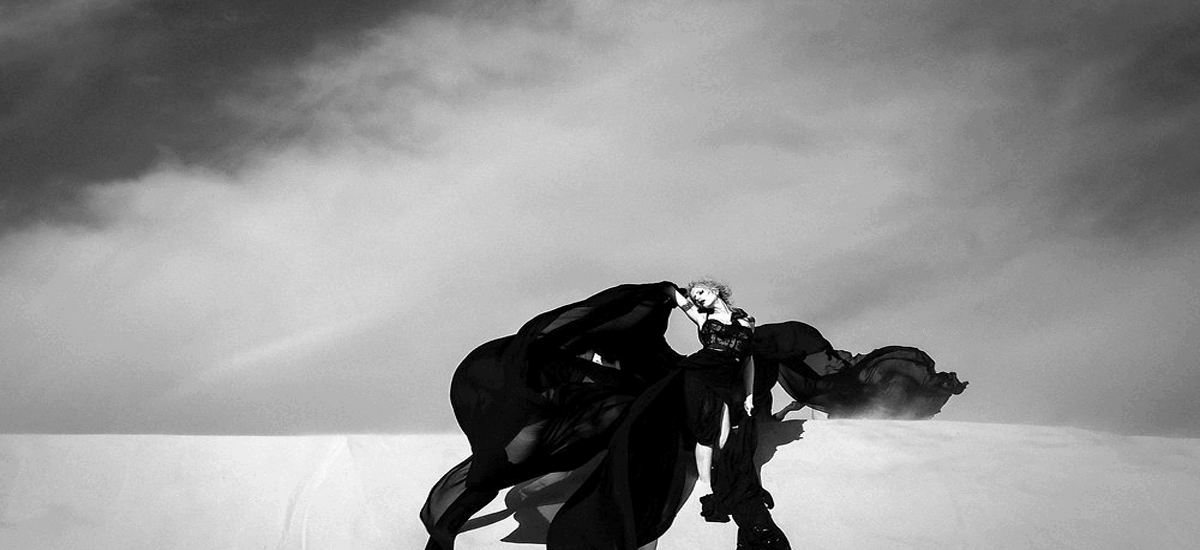
When Shadows Speak, The Silent Power Of Black and White Photography

By focusing on light, shadow, and contrast, this style highlights emotions, textures, and stories that often go unnoticed. Simplicity is its strength, allowing the viewer to see details in a deeper and more thoughtful way. Below, Photography – Capturing Every Detail will provide a more complete explanation.
Seeing Beyond Color
Black and white photography invites us to see the world differently. Without color, the eye focuses more on shapes, lines, and composition. This approach helps photographers capture the essence of a subject rather than its surface appearance. By removing color distractions, images feel more honest and direct.
The viewer connects more easily with the subject’s emotion and form. This is why black and white photography remains powerful even in the age of high-resolution color images. It also trains photographers to observe light carefully. Understanding how light defines objects becomes more important than choosing vibrant colors, leading to stronger visual awareness.
Contrast As Visual Language
Contrast is the heart of black and white photography. The balance between bright highlights and deep shadows creates tension and interest. Strong contrast can add drama, while softer contrast can feel calm and emotional. Through contrast, photographers guide the viewer’s attention. A bright subject against a dark background naturally becomes the focal point.
This visual guidance helps tell a clear story without words. When used thoughtfully, contrast adds depth and meaning. It turns simple scenes into expressive images that communicate mood, conflict, or harmony through light alone.
Read Also: Beauty and Style: A Guide to Fashion Model Photography
Light That Shapes Emotion

Light is the main tool in black and white photography. Its direction and intensity shape how a subject appears. Side lighting enhances texture, while soft lighting creates smooth transitions and gentle tones. Instead of avoiding shadows, photographers use them creatively. Shadows add mystery and dimension, making images feel more dramatic or symbolic.
They can hide details or reveal emotions subtly. By mastering light and shadow, photographers control the emotional impact of their images. The same subject can feel joyful, lonely, or powerful depending on how light is used.
The Beauty Of Texture and Detail
Without color, textures become more noticeable. Wrinkles, fabric fibers, and rough surfaces stand out clearly in black and white images. These details add richness and realism to a photograph. Photographers often choose subjects with strong textures to maximize visual impact.
Careful focus and contrast help bring out small details that might be overlooked in color photography. This attention to detail gives images depth and character. Viewers are encouraged to explore the photograph slowly, discovering visual information layer by layer.
Emotion In Simplicity
Black and white photography often feels more emotional because of its simplicity. With fewer visual elements, viewers focus on expressions, gestures, and atmosphere. Human portraits especially feel more intimate and sincere. The lack of color allows emotions to stand alone. Joy, sadness, strength, or silence become clearer without visual noise.
This creates a strong emotional connection between the image and the viewer. In its quiet simplicity, black and white photography tells timeless stories. Through contrast and light, ordinary moments are transformed into powerful and lasting visual narratives.
Stay inspired and explore the art of black and white photography every day. Discover how light, contrast, and shadow reveal timeless emotions, textures, and stories only at Photography – Capturing Every Detail.
Image Information Source:
First Image from: www.vivaoclique.com
Second Image from: fiveable.me
